
When Your AI Screws Up, Who Owns It?
Oct 19th, 2026When AI makes a mistake, who's responsible? Learn about AI accountability, business risks and how NZ companies can use AI responsibly.
Read More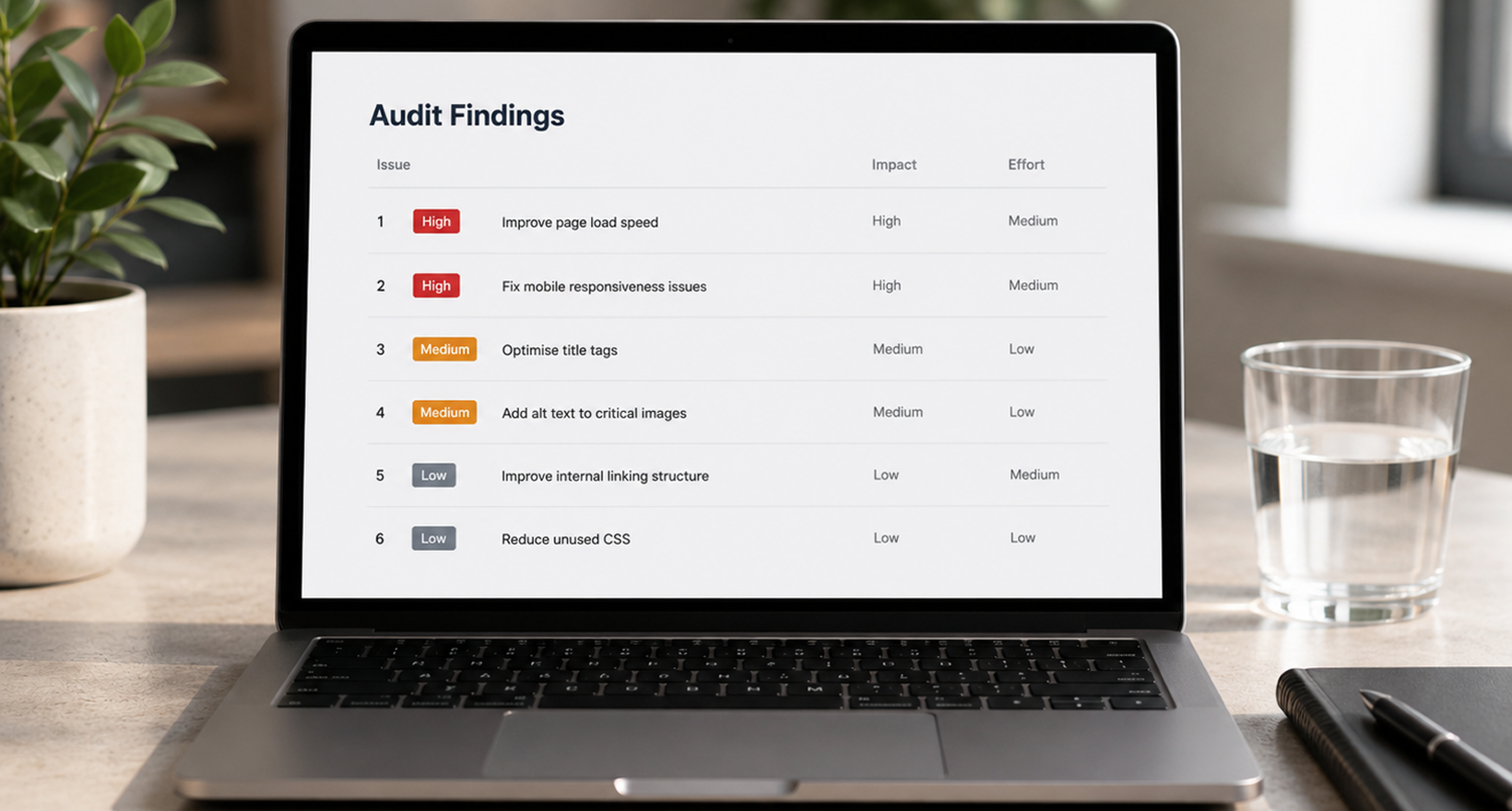
You Asked
We Answer
Almost every NZ business we speak to about organic performance is working from a feeling rather than a diagnosis. Traffic feels flat. Rankings feel like they have slipped. A competitor feels like they are everywhere. Feelings are a reasonable starting point, but they are a terrible basis for deciding where to spend your marketing budget.
An SEO audit replaces the feeling with facts. It is the diagnostic step that tells you whether your problem is technical, content-related, competitive, or structural, and in 2026, with Google shipping multiple algorithm updates in quick succession and AI search reshaping click behaviour, that diagnosis matters more than it ever has.
An SEO audit is a structured review of your website and its organic search performance. It examines how easily search engines can crawl and understand your site, how well your content matches what your audience is searching for, how your authority compares to the competitors ranking above you, and how effectively the site turns organic visitors into enquiries or sales.
The output should not be a score. It should be a prioritised list of specific issues and opportunities, each with a clear explanation of its impact and the effort required to address it. If an audit does not tell you what to do first and why, it has not done its job.
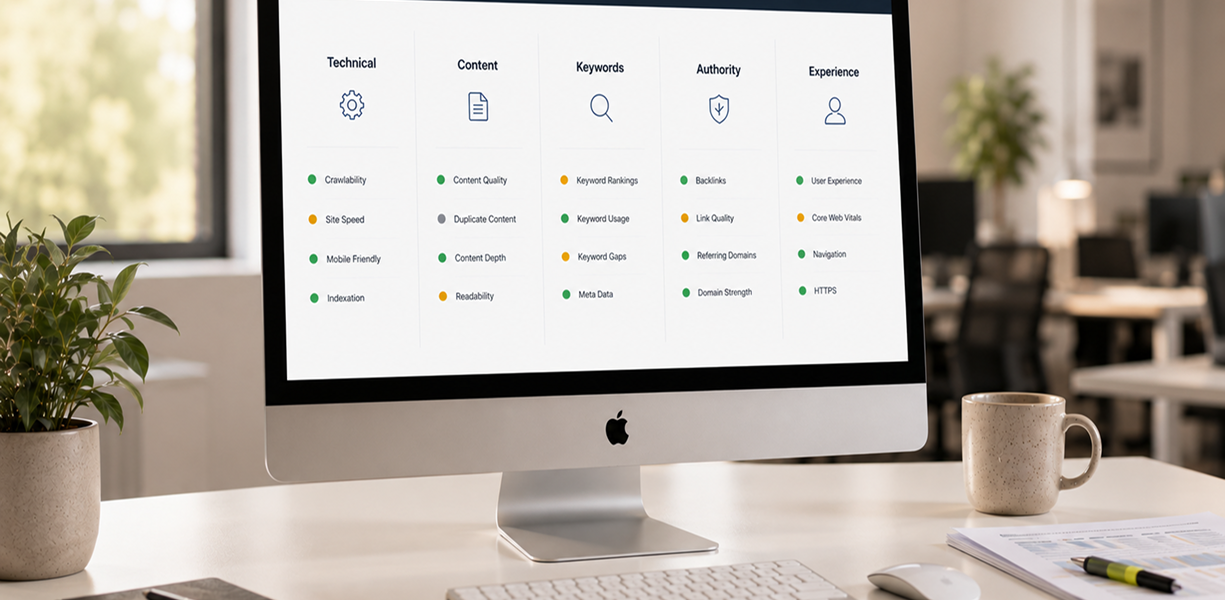
This is the foundation: can Google crawl, render and index your website efficiently? A technical review covers crawlability and indexation, site speed and Core Web Vitals, mobile experience, site architecture and internal linking, structured data, and issues like duplicate content, redirect chains and broken pages. Google’s own Search Console documentation sets out how these systems work, and a surprising number of NZ websites fail at this level without anyone realising, because the site looks perfectly fine to a human visitor.
This part of the audit asks whether your pages deserve to rank. It reviews how well each key page targets a clear search intent, the quality and originality of the content, heading structure, title tags and meta descriptions, and whether your site demonstrates the experience and expertise Google’s systems increasingly reward. As we covered in our analysis of the March 2026 core update, pages that merely rephrase what already ranks are losing ground to content with genuine original value, so this assessment has real teeth now.
An audit should map where you currently rank, where the genuine opportunities sit, and who actually occupies the positions you want. The most valuable findings are usually the queries where you already rank on page one or two but capture almost no clicks, because a page targeting the wrong intent, or no dedicated page at all, is quietly absorbing impressions. Those striking-distance opportunities are typically the fastest wins available.
Links from credible, relevant websites remain a significant factor in how Google evaluates trust. The audit reviews your backlink profile against the competitors outranking you, identifies toxic or spammy links, and highlights realistic opportunities to close the gap.
Ranking is only half the job. A complete audit also looks at what happens after the click: engagement, page experience, and whether key landing pages are structured to convert. There is little value in doubling organic traffic to pages that do not turn visitors into customers, which is why we treat SEO and conversion rate optimisation as two halves of the same discipline.
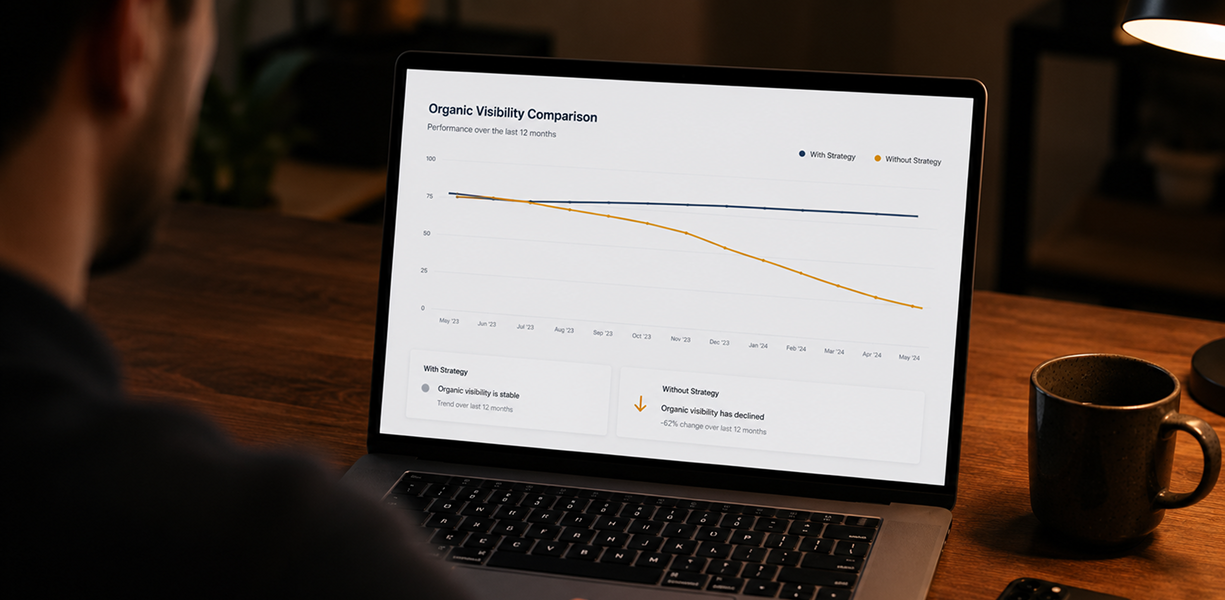
Two shifts have raised the stakes. First, Google’s update cadence has accelerated, with three confirmed updates landing in a five-week window earlier this year. Sites are being reassessed more frequently, and issues that were tolerated for years are now punished quickly. Second, AI search features have broken the old link between rankings and traffic. AI Overviews now trigger on nearly half of tracked queries, and when they appear, clicks to even the top organic result drop sharply. Your rankings can look stable in Search Console while your traffic quietly declines.
An audit is how you separate those causes. A traffic decline driven by a technical problem, a content quality issue, or a structural shift in search behaviour each demands a completely different response, and businesses regularly spend months solving the wrong one. Part of the modern answer is also ensuring your content is structured so AI systems can cite it, which we cover in our guide to getting your website into ChatGPT results.
You do not need an audit every month, but certain situations make one genuinely valuable: organic traffic has declined or flattened and you do not know why; you have never had one and are investing in content marketing or paid channels on top of an unexamined foundation; you have recently rebuilt or migrated your website; a competitor has overtaken you for terms you used to own; enquiries have dropped even though traffic looks stable; or you are about to invest seriously in SEO and want to know the starting position before committing budget.
That last one deserves emphasis. Commissioning ongoing SEO work without an audit is like renovating a house without a builder’s report. Sometimes everything is fine underneath. The point is knowing.
The audit itself changes nothing. Its value is entirely in what happens next, which is why the deliverable that matters is a prioritised roadmap: quick wins first, typically technical fixes and striking-distance content improvements, then the medium-term content and authority work that compounds over time.
The businesses that get the most from an audit treat it as the first step of a plan connected to their broader digital strategy, with clear measurement through tools like Google Analytics and Search Console so the impact of each fix is visible. Set up properly, analytics and insights turn the audit from a document into a feedback loop.
NZ Digital provides search engine optimisation services for businesses across New Zealand, and every engagement starts with exactly this kind of diagnosis: a clear-eyed review of where your website stands, what is holding it back, and which fixes will move the needle first.
If your organic performance has you guessing, stop guessing. Visit our contact page and let’s talk about what an audit of your website would uncover.
NZ Digital are a Auckland based digital marketing agency, we offer a wide range of done for you digital marketing and lead generation services. If you have more questions or would like to book a FREE Digital Marketing consult please schedule a call with us.

When AI makes a mistake, who's responsible? Learn about AI accountability, business risks and how NZ companies can use AI responsibly.
Read More
SEO is one of the most important long-term investments in digital marketing, but choosing the right agency can be difficult when so many promise the same results. The difference often comes down to transparency, strategy and the questions you ask before signing.
Read More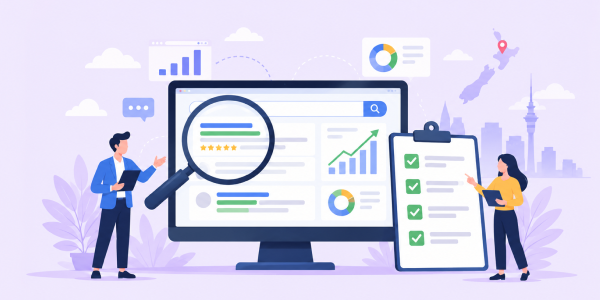
Performance Max gives businesses a way to reach customers across Google’s entire advertising network from one campaign, but its success depends heavily on strong tracking, enough conversion data and clear commercial goals.
Read More


