
When Your AI Screws Up, Who Owns It?
Oct 19th, 2026When AI makes a mistake, who's responsible? Learn about AI accountability, business risks and how NZ companies can use AI responsibly.
Read More
AI is changing how customers find and choose businesses online. New research suggests that while small businesses are increasingly focused on AI visibility, many could be overlooking the foundations that help them get discovered in the first place. Here’s what New Zealand businesses need to know.
For years, getting found online meant ranking well on Google, appearing in local search results and maintaining a strong website. But the way customers discover businesses is changing.
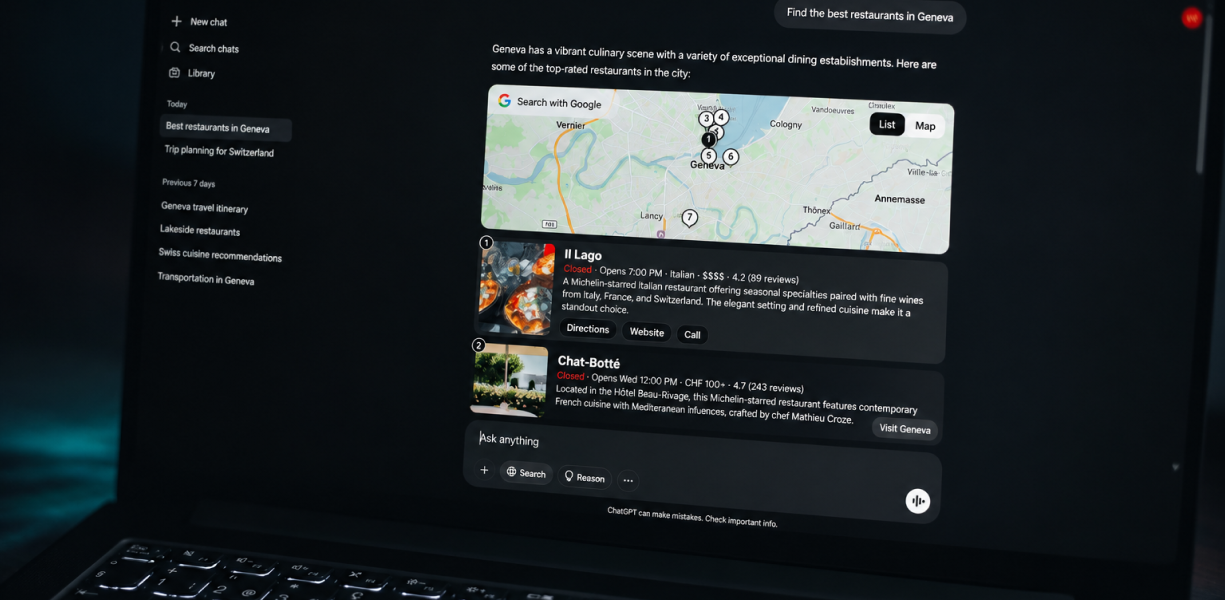
Instead of searching for a service and scrolling through pages of results, people can now ask AI tools like ChatGPT, Google Gemini and Google’s AI-powered search experiences to recommend businesses, compare providers and help them make purchasing decisions.
Think about the difference. A traditional Google search might be “commercial electrician Auckland”. An AI search could be “Can you recommend a reliable commercial electrician in Auckland that works with property managers and offers ongoing maintenance?”
The second question gives AI considerably more context about what the customer needs. Rather than simply matching keywords, AI can help narrow down suitable options and explain why they might be worth considering.
For New Zealand businesses, the question is no longer just whether you rank on Google. It’s whether AI can find, understand and confidently recommend your business. And there’s growing evidence that businesses are starting to take notice.
Quick Links
Recent research from BrightLocal’s Small Business Marketing Report 2026 found that 65% of surveyed small businesses are working on improving their visibility in AI search. That’s a significant indication of how quickly AI has become part of the digital marketing conversation.
But the research raises another important issue: businesses may be focusing on appearing in AI-generated answers while overlooking the traditional marketing channels and local SEO foundations that help support their online visibility.
It’s an important distinction. AI search doesn’t exist in isolation. Search engines, business listings, website content, reviews and other publicly available information can all contribute to how AI systems discover and interpret businesses.
For example, an Auckland accounting firm might have an attractive website and an established client base. But if its website provides little detail about the industries it specialises in, its Google Business Profile is incomplete and its online presence is inconsistent, AI tools may have less useful information to work with when answering a relevant question.
Being established in the real world doesn’t automatically translate into being clearly represented online. And that’s where the opportunity lies.
Source: BrightLocal, Small Business Marketing Report 2026, published 21 October 2026. The findings are from BrightLocal’s survey and should not be interpreted as New Zealand-specific statistics.
New Zealand is a relatively small and highly competitive market. For many businesses, particularly those operating in Auckland, Wellington, Christchurch and other regional centres, attracting the right local customers is essential.
Traditionally, businesses have invested in search engine optimisation (SEO) to improve their rankings and generate organic website traffic. That remains important, but AI introduces another way for customers to discover businesses.
Consider a few examples:
A homeowner in Christchurch asks ChatGPT to recommend roofing companies that specialise in residential roof replacements.
A business owner in Auckland uses Gemini to compare digital marketing agencies with experience in lead generation.
A first-home buyer in Wellington asks an AI assistant what to look for when choosing a mortgage adviser.
A property manager in Tauranga asks for commercial cleaning companies that service multiple buildings.
In each case, the customer is looking for more than a list of websites. They’re seeking relevant information to help them make a decision.
If your business has a clear, credible and well-structured online presence, AI systems may have a better chance of recognising that your services match the customer’s requirements. However, visibility is not guaranteed. Different AI platforms use different information sources, and recommendations can vary depending on the question, location and available information.
The commercial opportunity is straightforward: you want your business to be a credible option wherever your potential customers are searching.

Search Engine Optimisation (SEO) is the process of improving your website’s visibility in traditional search engine results. Answer Engine Optimisation (AEO) focuses on making your business information and content easier for AI-powered search and answer systems to discover, interpret and reference.
Although the terminology is relatively new, much of the work overlaps. Strong SEO remains an important foundation for AI visibility. Clear website structure, useful content, technical accessibility, business credibility and consistent information can support both.
The difference is largely in how customers interact with the results. With traditional SEO, the objective is often to encourage someone to click through to your website. With AEO, the objective also includes helping your business appear as a relevant source or recommendation within an AI-generated answer.
For NZ businesses, this means your digital strategy should consider both traditional search rankings and how your business is represented across AI-powered platforms.
AEO isn’t a replacement for SEO. It’s an extension of how businesses need to think about being discovered online.
The encouraging news is that improving AI visibility doesn’t necessarily require starting from scratch. Many of the most useful improvements involve strengthening the digital foundations your business should already have in place.
One of the biggest missed opportunities we see with business websites is a lack of specific, useful information.
A website might say:
“We deliver exceptional service and tailored solutions.”
But that tells a customer, or an AI system, very little about the business. Compare that with:
“We provide commercial electrical maintenance, installations and compliance services for Auckland businesses, property managers and construction companies.”
The second description clearly identifies the services, customers and geographic market. Your website should explain what you do, who you help, where you operate and what makes your business relevant to the customers you’re trying to attract.
This should be reflected across your homepage, individual service pages, about page and frequently asked questions.
For businesses serving customers in specific locations, local search visibility remains extremely important. Your Google Business Profile should contain accurate business information, appropriate categories, services, operating hours and relevant imagery.
Consistency also matters. If your business operates under different names, addresses or contact details across various directories and online platforms, it can create confusion for both customers and systems trying to understand your business.
For example, a plumbing company servicing North Shore, Hibiscus Coast and Rodney should clearly communicate its service coverage rather than relying on a generic statement that it operates throughout Auckland.
The more clearly and consistently your business is represented online, the easier it is for customers and search systems to understand where you fit.
Reviews are valuable because they provide real-world evidence of customer experiences. They can help potential customers assess a business before making contact and contribute to its wider online reputation.
A business with recent, detailed reviews that discuss specific services may present a stronger picture of its capabilities than one with very little independent customer feedback.
For example, a review mentioning a successful commercial fit-out or responsive emergency plumbing service provides more context than a generic five-star rating alone.
However, reviews are not a shortcut to guaranteed AI recommendations. They’re one part of a wider picture that includes business information, website content, reputation and relevance.
For NZ businesses, the priority should be encouraging genuine customer reviews, responding professionally and maintaining an active, trustworthy online presence.
AI-powered search is particularly well suited to conversational questions. That’s why useful, informative website content is becoming increasingly important.
Instead of creating pages that simply repeat keywords, businesses should focus on answering the questions customers ask before making a purchasing decision.
For example, a New Zealand building company could publish content covering:
How much does a home renovation cost in Auckland?
Do I need building consent to renovate my bathroom in NZ?
What’s the difference between a renovation and a new build?
How long does a typical kitchen renovation take?
These are commercially relevant questions that can attract people researching a service. Well-written answers demonstrate expertise, provide useful information and give search systems meaningful content to interpret.
Content should also reflect the New Zealand market. That means using local terminology, relevant examples, NZ pricing where appropriate and accurate references to local requirements. Generic international content isn’t always helpful to someone trying to make a decision in New Zealand.
Even excellent content has limited value if search engines and other authorised systems struggle to access it. Your website should have a logical structure, clear headings, descriptive page titles and content that can be read without unnecessary technical barriers.
Structured data, where appropriate, can also help search engines understand details such as your business identity, services and location. It’s equally important to review how your website handles search engine and AI-related crawlers.
Some websites unintentionally restrict access through security settings, robots directives or technical configurations. These details don’t guarantee inclusion in AI search results, but they can affect whether important website information is accessible.
A proper technical review should consider both traditional search performance and the accessibility of content relevant to AI-powered discovery.
This is where things become interesting. Most businesses monitor their Google rankings, website visits or advertising enquiries. Far fewer actively assess how their brand appears in AI-generated answers.
A useful starting point is to test the kinds of questions your customers might ask. For example:
“Who are the best commercial cleaning companies in Christchurch?”
“Which Auckland mortgage advisers specialise in first-home buyers?”
“Can you recommend a website design agency in New Zealand for a growing eCommerce business?”
Then consider:
Does your business appear? If it does, is the information accurate? Are competitors being mentioned? What sources are referenced? And does the answer reflect the services you actually want to promote?
It’s important not to judge performance from one search. AI-generated answers can change between platforms, sessions and prompts. They may also contain inaccurate or outdated information.
A more meaningful approach is to monitor a consistent group of relevant questions over time and compare how your business appears alongside competitors. This creates a starting point for understanding where your visibility is strong and where improvements may be needed.
One of the most important lessons from the BrightLocal research is that enthusiasm for AI visibility shouldn’t distract businesses from the fundamentals.
This is where things become interesting. Most businesses monitor their Google rankings, website visits or advertising enquiries. Far fewer actively assess how their brand appears in AI-generated answers.
A useful starting point is to test the kinds of questions your customers might ask. For example:
“Who are the best commercial cleaning companies in Christchurch?”
“Which Auckland mortgage advisers specialise in first-home buyers?”
“Can you recommend a website design agency in New Zealand for a growing eCommerce business?”
Then consider:
Does your business appear? If it does, is the information accurate? Are competitors being mentioned? What sources are referenced? And does the answer reflect the services you actually want to promote?
It’s important not to judge performance from one search. AI-generated answers can change between platforms, sessions and prompts. They may also contain inaccurate or outdated information.
A more meaningful approach is to monitor a consistent group of relevant questions over time and compare how your business appears alongside competitors. This creates a starting point for understanding where your visibility is strong and where improvements may be needed.
It’s tempting to chase the latest marketing trend, particularly when AI is receiving so much attention. But a business that neglects its website, ignores local SEO and fails to maintain accurate online information is unlikely to solve those problems simply by introducing an AEO strategy.
For most New Zealand businesses, the better approach is to build on existing digital marketing activity. That means maintaining strong technical SEO, developing genuinely useful content, improving local business information and building a credible online reputation.
AI visibility should become part of the broader search strategy, not a separate exercise disconnected from everything else.
The shift towards AI-powered discovery presents both a challenge and an opportunity. Businesses that have invested in strong websites, relevant content and consistent online visibility already have a useful foundation.
Others may need to reassess how effectively their digital presence communicates what they offer, who they serve and why customers should choose them.
The important thing is not to assume that because your business performs well in Google, it will automatically be visible in AI-generated recommendations. The two are connected, but they’re not identical.
And as customers become more comfortable using AI to research products, compare providers and shortlist businesses, understanding that distinction will become increasingly valuable.
The businesses that benefit won’t necessarily be those talking the most about AI. They’ll be those making it easier for customers and search systems to find reliable, relevant information about them.
At NZDigital, we’ve been helping New Zealand businesses improve their online visibility and digital performance since 2011. As search behaviour evolves, we’re helping businesses understand how traditional SEO and AI-powered discovery work together.
Our AI visibility audits look at how your business is represented across relevant AI search experiences, alongside the website, SEO, content and local visibility factors that may be influencing your discoverability.
We identify opportunities to strengthen your online presence and develop practical recommendations aligned with your business goals.
Want to know whether AI can find your business, and what you could be doing better?
Talk to NZDigital about an AI Visibility Audit SEO Services NZ and Auckland: Rankings That Drive Leads | NZ Digital
NZ Digital is an Auckland-based digital marketing agency specialising in lead generation, paid advertising, SEO, and digital strategy. If you’d like help understanding your performance or improving your results, get in touch for a strategy session.

When AI makes a mistake, who's responsible? Learn about AI accountability, business risks and how NZ companies can use AI responsibly.
Read More
SEO is one of the most important long-term investments in digital marketing, but choosing the right agency can be difficult when so many promise the same results. The difference often comes down to transparency, strategy and the questions you ask before signing.
Read More
Performance Max gives businesses a way to reach customers across Google’s entire advertising network from one campaign, but its success depends heavily on strong tracking, enough conversion data and clear commercial goals.
Read More


