
The Cost of SEO vs. The Cost of Doing Nothing
Aug 25th, 2026SEO has a clear price tag,but the real cost may be the customers, visibility and long-term growth your business is missing by doing nothing.
Read More
NZ Post’s 2026 eCommerce Market Sentiments report brings shopper and retailer research together into nine insights, and two of them should be on every online retailer’s radar this year. The first is that AI is becoming the new front door to retail. The second is that trust has become the currency of choice. For context, industry analysis of the New Zealand market in 2026 shows Google still handling more than 90 per cent of search here, with AI-generated overviews now appearing in roughly 15 per cent of searches and climbing for the research-style questions that shape buying decisions. International research points the same way, with close to half of shoppers already using AI to help research purchases.
You Asked
We Answer
The headline shift in this year’s report is about discovery. Shoppers are increasingly starting with AI, not a list of ten blue links.
The report describes AI as a powerful new way for shoppers to find value, curating product options, reviews and prices. Most people are not letting AI complete the purchase for them. They are using it to search and shortlist, which means AI visibility is the immediate challenge, and the opportunity, facing retailers. The catch is simple. When an AI tool answers a shopping question, it usually surfaces only one to three options. You are either named, or you are not in the conversation.
The second insight is that trust and transparency have become some of the biggest determinants of retail success. Kiwi shoppers are actively looking for signs of legitimacy and reassurance before they choose who to buy from. Local retailers have a distinct advantage here, and the spending data backs it up. In the first quarter of 2025, 75 percent of online spending went to local retailers, with spending on New Zealand businesses growing while offshore spending declined. Trust has to be earned, but you are starting from a position of strength.

If AI is the new front door, then getting through it needs a slightly different approach to traditional search. This is where Answer Engine Optimisation, or AEO, comes in. It sits alongside our SEO and AI search optimisation work rather than replacing it.
Traditional SEO aims to rank your page on a results page. AEO aims to get your business named and linked inside the AI answer itself. The questions change with it. Instead of asking how we rank for a keyword, the question becomes whether you are the most credible source for that topic. The two work together. SEO builds the authority and the foundations, and that same authority is what AI tools draw on when they decide who to cite.
AI systems prefer facts they can confirm. That means clear, well structured pages on your own site, backed by consistent information across the wider web, from reputable directories to reviews and industry sources. They reward clarity. If your key details, your products, your pricing, your service areas and your point of difference, are easy to read and hard to misread, you are far more likely to be the one named in an answer.
You do not need to rebuild everything. You need to make your store easy for AI to read and easy for a cautious shopper to trust.
Structure is everything. Clear page layouts, plain language, question and answer formatting, and proper schema markup all help AI tools understand what you sell and who you are. This is foundational work that also happens to improve the experience for human visitors, which is why it pays off twice. Getting it right often starts with your website design and development, so the structure is sound before you layer content on top.
Trust is not a vague feeling. It shows up in specifics. Genuine reviews, clear delivery costs and timeframes shown early, transparent returns, real contact details, and consistent information wherever your brand appears online. These are the cues a careful shopper looks for, and increasingly the cues an AI tool weighs up before recommending you.
AI visibility does not replace your existing channels; it sits on top of them. Strong organic search still brings qualified traffic, and well-run Google Ads and Meta campaigns still put you in front of buyers who are ready to act. The businesses that win in 2026 are the ones extending what works into the AI layer, not abandoning the basics to chase the new thing.
A simple sequence beats a big overhaul. Start by checking how your store currently appears when you ask common AI tools about your category. Then tidy the foundations, your page structure, your key facts and your schema, so AI can read you clearly. Next, shore up the trust signals across your product and checkout pages. Finally, make sure your SEO and paid activity are pulling in the same direction so every channel reinforces the others.

If you want a clear picture of where you stand, we will give you one. Our expert SEO/AEO team reviews your search presence, AI visibility, website and ads, then hands you a prioritised plan you can act on. No jargon, no pressure, just a straight read on what is working and where the growth is.
NZ Digital are a Auckland based digital marketing agency, we offer a wide range of done for you digital marketing and lead generation services. If you have more questions or would like to book a FREE Digital Marketing consult please schedule a call with us.
SEO has a clear price tag,but the real cost may be the customers, visibility and long-term growth your business is missing by doing nothing.
Read More
If you have asked three different web companies for a quote, you have probably received three wildly different numbers.
Read More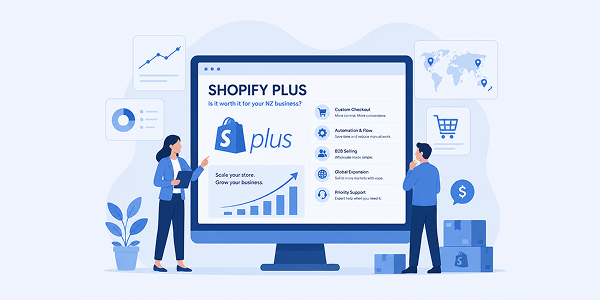
Shopify Plus is Shopify's enterprise tier, and it occupies an odd place in most NZ retailers' minds.
Read More


